
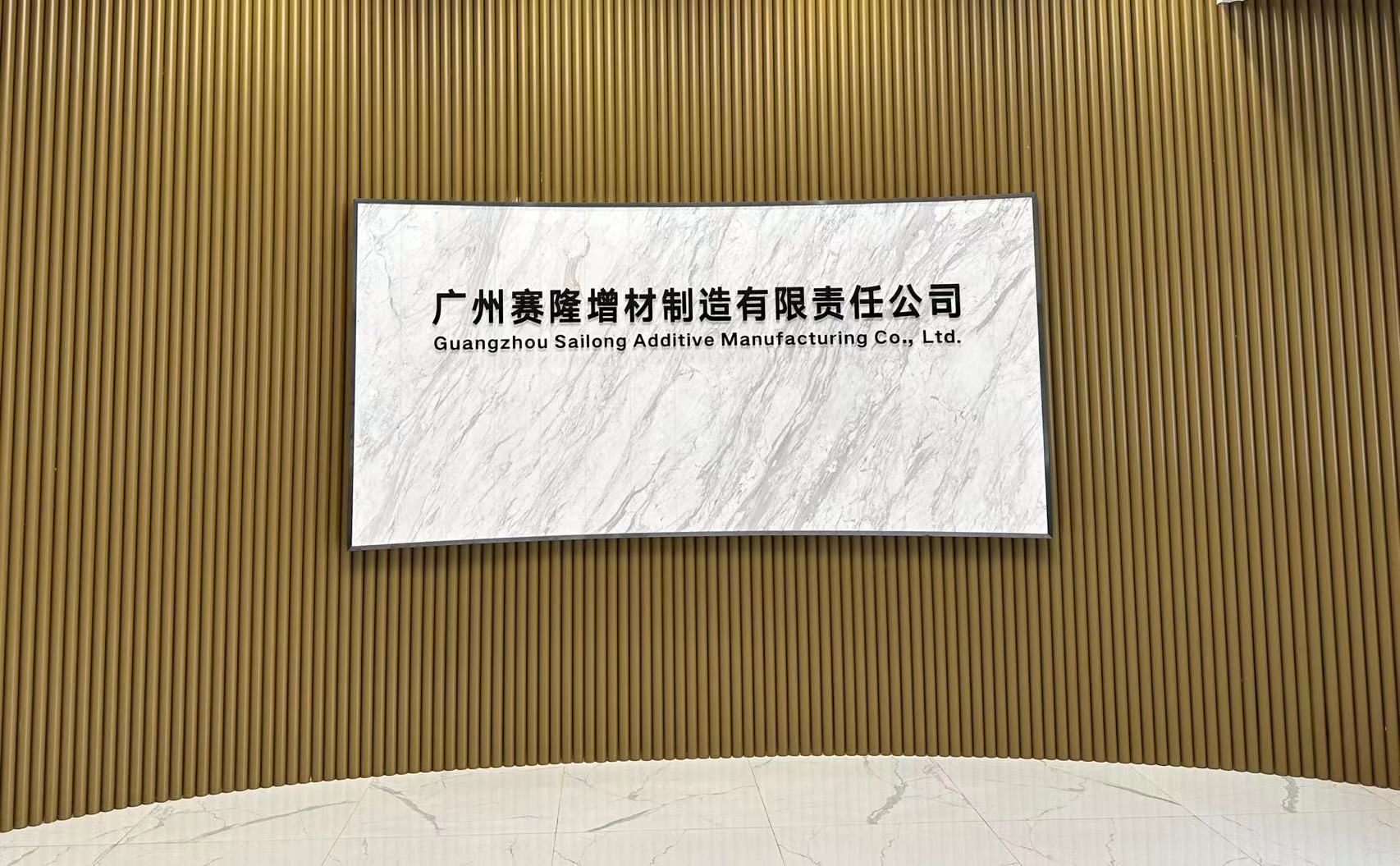
Guangzhou Sailon Additive Manufacturing Co., Ltd.
Fournisseur Machinery en Chine
À propos de Guangzhou Sailon Additive Manufacturing Co., Ltd.
Guangzhou Sailong Additive Manufacturing Co., Ltd. is a high-level talent-founded enterprise introduced by the Guangdong Provincial Government from the Northwest Nonferrous Metals Research Institute. The company has a standard factory building of more than 5,300 square meters in Huangpu District, Guangzhou. It has built batch production lines for metal spherical powder and electron beam 3D printing metal parts, and can provide full-process technical services for metal 3D printing.
Our 3D printing accessories are mainly medical implants, using SEBM technology, which has special advantages in forming high purity, high energy density in a vacuum environment, thereby forming high melting point tantalum. Our medical products can be used in clinical treatments to help patients recover, improve patient wound healing, and can be quickly integrated with the human body and are very biocompatible and friendly. Because the product is designed using an organ model, it is very suitable for patients and greatly improves the patient's cure rate.
The company is mainly engaged in the design, development, production and sales of metal powders, such as spherical titanium powder. High sphericity, excellent fluidity, low oxygen content, almost no hollow powder, high purity. powder. Sizes are 15-45 microns, 53-105 microns, 53-150 microns. In addition, according to your required size, we can customize it for you. Products have been widely used in additive manufacturing, cladding, spray coating, powder metallurgy, electronic coatings and other fields.
Relying on the latest research results in 3D printing, the company's entrepreneurial team will efficiently connect with the market and capital through implementation in Guangzhou, fill the gap in powder bed electron beam additive manufacturing technology in the Guangdong-Hong Kong-Macao Greater Bay Area, and create a world-class enterprise and well-known brand in metal additive manufacturing.
Photos produits
- Localisation:
- China
- Catégorie:
- Machinery
- Profil mis à jour le 24 mars 2026
Entreprises similaires
Tout voir
Zunhua Shuangjian Agricultural Machinery Manufacturing Co., Ltd.
Machinery
中国河北省唐山市河北省遵化市建明镇付家城村南
Zigong Jiahua Arts and Crafts Manufacturing Co., Ltd.
Machinery
中国四川省自贡市四川省自贡市大安区凉水井路78号

Zhuoyou International Trade (Qihe) Co., Ltd.
Machinery
中国山东省德州市山东省德州市齐河县马集镇联创产业园A区A2厂房

Zhuhai Belin Refueling Equipment Co., Ltd.
Other auto accessories, car chargers, other auto electronics
中国广东省珠海市珠海市香洲香华路63号7栋3号车库
Zhuhai Anshida International Trading Co., Ltd.
Machinery
中国广东省珠海市广东省珠海市香洲区凤凰北路2099号912
Zhoushan Zhengyuan Standard Parts Co., Ltd.
Other fasteners, anchors, bolts
中国浙江省舟山市浙江省舟山市普陀区沈家门大干海洋生物园正源路65号